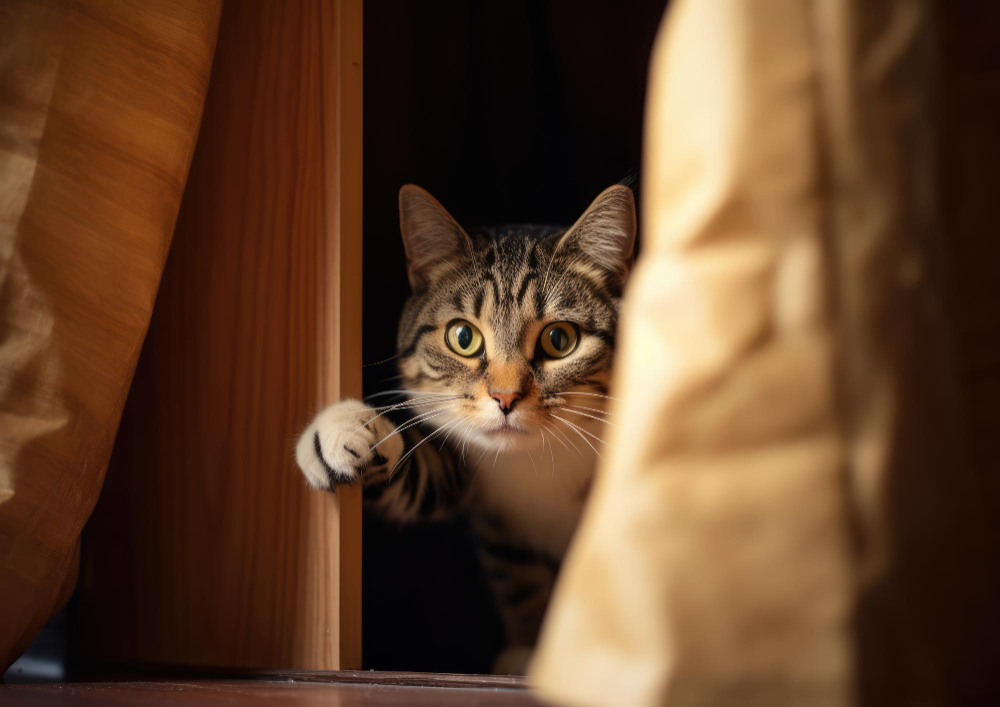
Understanding cat behavior: Why do cats scratch doors?
Cats are fascinating creatures with unique behaviors. One behavior that many cat owners find frustrating is scratching doors. But have you ever wondered why cats do this? Understanding the reasons behind this behavior is the first step in effectively training your cat to stop scratching doors.
One reason cats scratch doors is to mark their territory. Cats have fragrance glands of their paws, and once they scratch, they go away behind a fragrance that other cats can locate. By scratching doors, cats are essentially saying, “This is my territory!”
Another reason cats scratch doors is to relieve stress and anxiety. Scratching is a natural behavior for cats and helps them release pent-up energy. If your cat is scratching doors excessively, it may be a sign that they are feeling anxious or bored. By providing them with alternative outlets for their energy, you can help reduce their need to scratch doors.
Exploring the Feline Mindset
Education your cat isn’t always simplest useful for you, but it is also useful for your cat. Cats are shrewd creatures which can analyze and adapt to new behaviors. By way of education your cat, you could teach them the way to behave as it should be in your home and provide them with intellectual stimulation.
Training also strengthens the bond between you and your cat. When you spend time schooling your cat, you’re building trust and growing a superb courting. Cats thrive on interest and love, and training is a remarkable manner to reveal them which you care.
Training methods for cats: Positive reinforcement vs. punishment
When it comes to training cats, there are two primary methods: positive reinforcement and punishment. Positive reinforcement focuses on rewarding your cat for good behavior, while punishment involves correcting or scolding your cat for undesirable behavior.
Positive reinforcement is widely regarded as the most effective and humane training method for cats. This method involves rewarding your cat with treats, praise, or playtime when they exhibit the desired behavior. For example, if you want to train your cat to stop scratching doors, you can reward them with a treat whenever they use their scratching post instead.
Punishment, on the other hand, is not recommended for training cats. Cats do not respond well to punishment, and it can lead to fear, stress, and even aggression. Instead of punishing your cat for scratching doors, focus on redirecting their behavior and providing them with alternative outlets for their scratching needs.
Preparing your home for cat training
Before you embark on training your cat to stop scratching doors, it’s important to prepare your home. Here are a few steps you can take to create an optimal training environment for your feline friend:
- Provide an appropriate scratching post: Cats need to scratch, so it’s essential to provide them with a suitable scratching post. Choose a post that is tall enough for your cat to fully stretch out, and make sure it is sturdy and stable.
- Place scratching posts strategically: Put scratching posts near the doors that your cat likes to scratch. This will give them an alternative option to scratch instead of the door.
- Use deterrents: To discourage your cat from scratching doors, you can use deterrents such as double-sided tape or aluminum foil. Cats do not like the texture of these materials and will be less likely to scratch.
By implementing these preparations, you are setting the stage for successful cat training.
Step-by-step guide to training your cat to stop scratching doors
Now that you have a better understanding of why cats scratch doors and have prepared your home for training, let’s dive into the step-by-step guide to training your cat to stop scratching doors:
- Identify the scratching areas: Take note of the doors that your cat tends to scratch the most. This will help you focus your training efforts.
- Provide alternative scratching surfaces: Place scratching posts or mats near the doors that your cat likes to scratch. Encourage your cat to use these surfaces by using catnip or treats.
- Redirect their behavior: When you catch your cat scratching the door, gently redirect their attention to the alternative scratching surface. You can use a toy or treat to lure them away from the door.
- Reward good behavior: Whenever your cat uses the scratching post or mat instead of the door, praise and reward them with treats or playtime. Positive reinforcement is key to successful training.
- Be consistent: Consistency is crucial when training your cat. Make sure to redirect their behavior every time you catch them scratching the door and reward them for using the appropriate scratching surface.
- Patience is key: Remember, training takes time and patience. It may take a while for your cat to fully grasp the concept, so be patient and persistent.
Common challenges and Analyzing Cat Behavior
During the training process, you may encounter some challenges. Here are a few common challenges and how to overcome them:
- Relapses: Your cat may have moments of relapse and start scratching the door again. If this happens, go back to the basics and reinforce the training. Be patient and consistent, and your cat will eventually get back on track.
- Lack of interest in scratching surfaces: If your cat is not showing interest in the alternative scratching surfaces, try using different materials or textures. Some cats prefer sisal, while others prefer carpet or cardboard.
- Aggression during training: If your cat becomes aggressive during training, take a step back and assess the situation. It’s important to create a safe and positive environment for both you and your cat. Consult with a professional trainer or behaviorist if needed.
Remember, each cat is unique, and what works for one may not work for another. Stay flexible and adapt your training methods to suit your cat’s individual needs.
Tips for maintaining the training and preventing relapses
Once you have successfully trained your cat to stop scratching doors, it’s important to maintain the training and prevent relapses. Here are a few tips to help you with this:
- Provide ongoing mental stimulation: Cats need mental stimulation to prevent boredom and anxiety. Make sure to offer your cat with lots of toys, puzzles, and interactive video games to maintain their thoughts engaged.
- Regularly trim your cat’s nails: Via retaining your cat’s nails trimmed, you could limit the damage due to scratching. Be sure to use proper nail clippers and consult a veterinarian if you are unsure how to trim your cat’s nails.
- Monitor your cat’s behavior: Keep an eye on your cat’s behavior and look for any signs of stress or anxiety. If you notice any changes in their behavior, address the underlying issue promptly.
By following these tips, you can help ensure that your cat remains well-behaved and happy.
Other methods to redirect your cat’s scratching behavior
In addition to training, there are other methods you can try to redirect your cat’s scratching behavior:
- Use pheromone sprays or diffusers: Pheromone sprays or diffusers emit a synthetic version of the pheromone that cats produce when they are content. These products can help reduce stress and anxiety, which may be contributing to your cat’s door scratching behavior.
- Cover the door with a protective material: If your cat is particularly persistent in scratching a specific door, you can cover it with a protective material such as a clear plastic sheet or a door shield. This will prevent your cat from causing damage to the door while you continue with the training process.
- Provide vertical scratching options: Cats love to stretch and scratch vertically. Consider providing your cat with vertical scratching options such as tall scratching posts or wall-mounted scratching panels. This will give your cat another outlet for their scratching needs.
Remember, these methods should be used in conjunction with training and not as a substitute for it.
Additional resources for cat training
If you are looking for more information and resources on cat training, here are a few recommendations:
- Books: “Think Like a Cat” by Pam Johnson-Bennett and “CatWise” by Pam Johnson-Bennett are excellent resources for understanding cat behavior and effective training techniques.
- Online forums and communities: Joining online forums and communities dedicated to cat owners and trainers can provide valuable insights and support.
- Professional trainers and behaviorists: If you are struggling with training your cat, don’t hesitate to seek professional help. Trainers and behaviorists specialize in working with cats and can provide personalized guidance.
Conclusion: Comprehending Feline Actions
Training your cat to stop scratching doors may require time and patience, Understanding cat behavior but the effort is well worth it. By understanding your cat’s behavior, using positive reinforcement techniques, and providing appropriate alternatives, you can successfully train your cat to say goodbye to door scratching.
Remember to be consistent, stay patient, and maintain a positive and loving relationship with your feline friend throughout the training process. With willpower and patience, you could unlock the secrets and techniques to a properly-behaved and glad cat.
Now, it’s time to put these techniques into practice and enjoy a scratch-free door and a harmonious home with your beloved pet!
Follow us on: Facebook, Twitter, Pinterest, Instagram