Introduction: Alligators and Crocodiles – Similar Yet Different
Alligators and crocodiles are captivating creatures which have captivated the human creativeness for hundreds of years. With their effective jaws, scaly our bodies, and stealthy actions, those reptiles have often been wrong for one another. However, despite the similarities, there are distinct differences between alligators and crocodiles that set them apart. In this text, we are able to delve into the anatomy, habitat, behavior, weight loss program, reproduction, geographic distribution, and conservation fame of those astonishing creatures. By means of the end, you will have a deeper information of the differences between alligators and crocodiles.
Anatomy: Understanding the Physical Characteristics
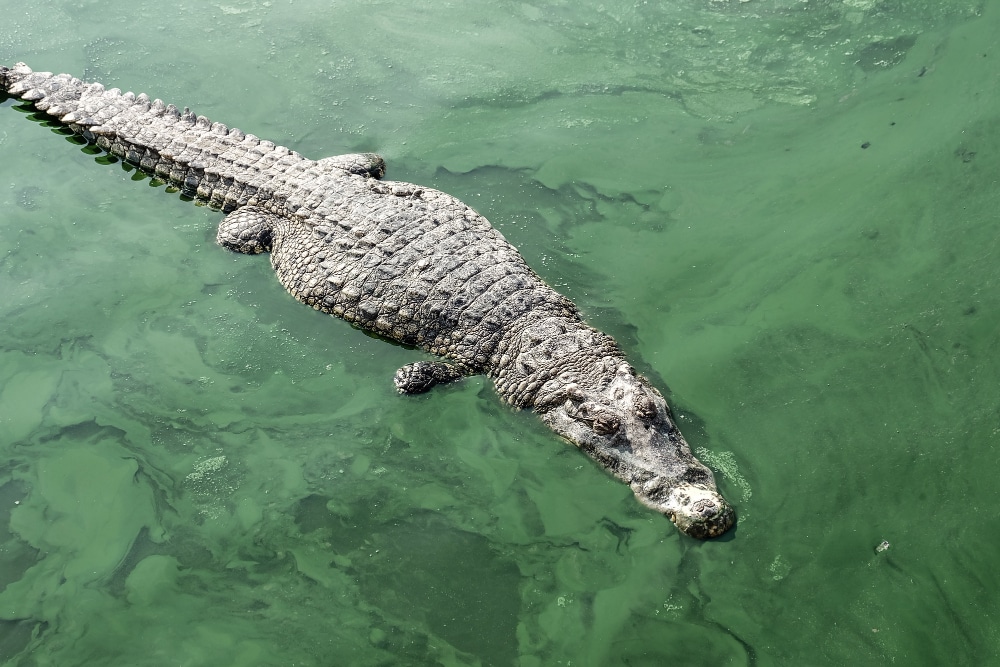
To differentiate among alligators and crocodiles, it’s miles essential to have a look at their bodily features. Both reptiles have long bodies covered in armored scales and possess powerful tails that aid in swimming. However, there are notable differences in their snouts. Alligators have broad, U-shaped snouts, while crocodiles have slender, V-shaped snouts. Additionally, when their mouths are closed, alligators have teeth that are concealed, while crocodiles have visible teeth even when their mouths are shut. Another distinguishing characteristic is that alligators have a black coloration, while crocodiles tend to have a grayish-green hue.
Alligators and a crocodiles also differ in terms of size. On average, alligators are smaller than crocodiles, with adult males reaching lengths of up to 11 feet, while crocodiles can grow to be over 16 feet long. Furthermore, their habitat preferences contribute to their physical differences. Alligators are tailored to freshwater environments, whereas crocodiles are greater flexible and might thrive in each freshwater and saltwater habitats.
Habitat: Where Alligators and Crocodiles Call Home
Information the habitat choices of alligators and crocodiles is crucial for differentiating among the two. Alligators are usually located in the southeastern u.S.A., mainly in states which includes Florida and Louisiana. They inhabit wetlands, swamps, and sluggish-transferring rivers, in which they are able to discover ample food and appropriate nesting sites. However, crocodiles have a broader geographic distribution, starting from the Americas to Africa, Asia, and Australia. They inhabit a wider range of habitats, consisting of freshwater rivers, saltwater estuaries, and even brackish swamps.
It’s far essential to be aware that the habitat preferences of alligators and crocodiles can overlap in sure regions. As an instance, in some elements of Florida, both alligators and crocodiles may be found dwelling in close proximity. But, by analyzing the precise traits of the habitat, inclusive of the salinity of the water and the presence of positive plant species, it’s miles feasible to decide whether or not you are watching an alligator or a crocodile.
Behavior: Spotting the Behavioral Differences
While alligators and crocodiles may share some behavioral traits, there are distinct differences that can help in distinguishing between the two. Alligators are generally more docile and less aggressive compared to crocodiles. They tend to avoid human interaction and are more likely to retreat when approached. Conversely, crocodiles are known for his or her aggressive nature and are much more likely to show territorial conduct. They may exhibit aggression toward both human beings and different animals, making them more risky to encounter within the wild.
Every other behavioral difference lies in their searching techniques. Alligators usually depend upon ambush procedures, patiently waiting for their prey to come back within striking distance earlier than launching an assault. However, crocodiles are greater lively hunters, often chasing down their prey in a stealthy and strategic manner. By means of staring at their behavior in the wild, it is viable to determine the variations amongs.
Diet: What Alligators and Crocodiles Prefer to Eat
The food plan of alligators and crocodiles offers in addition insights into their differences. While they each eat an expansion of prey, their choices range barely. Alligators are typically carnivorous, feeding on fish, turtles, snakes, and small mammals. They may be additionally known to scavenge carrion when the opportunity arises. On the other hand, crocodiles have a extra various food plan, which incorporates no longer handiest fish and small mammals but additionally larger prey which includes deer, wild boar, or even different reptiles.
The differences of their diets may be attributed to their habitat preferences. Alligators, being basically freshwater inhabitants, have tailored to prey that is effectively available in their surroundings. Crocodiles, with their broader habitat variety, have get right of entry to to a greater variety of prey, permitting them to adapt to extraordinary looking techniques and consume larger animals. By way of examining the food regimen of these reptiles, it’s miles possible to discern whether or not you’re gazing an alligator or a crocodile inside the wild.
Reproduction: How Alligators and Crocodiles Multiply
Understanding the reproductive habits of alligators and crocodiles can provide valuable insights into their distinctions. Both reptiles lay eggs and exhibit similar nesting behaviors. However, there are differences in the incubation period and the temperature-dependent sex determination. Alligator eggs typically hatch within 60 to 70 days, while crocodile eggs have a longer incubation period, ranging from 80 to 90 days.
Furthermore, the sex of alligator hatchlings is determined by the temperature at which the eggs are incubated. Lower temperatures result in female hatchlings, while higher temperatures result in males. In contrast, crocodiles exhibit the opposite pattern, with lower temperatures resulting in male hatchlings and higher temperatures resulting in females. By means of analyzing the reproductive patterns of alligators and crocodiles, researchers can benefit insights into their populace dynamics and the conservation efforts needed to protect those species.
Geographic Distribution: Where to Find Alligators and Crocodiles
The geographic distribution of alligators and crocodiles affords similarly clues to their distinctions. As noted in advance, alligators are broadly speaking discovered in the southeastern america, with the yankee alligator being the most well-known species. However, they can also be found in components of China and the Caribbean. Crocodiles, then again, have a greater enormous distribution. They may be discovered in numerous areas, which include the Americas, Africa, Asia, and Australia. The saltwater crocodile, known for its aggressive nature, is the largest species of crocodile and may be discovered in the coastal areas of Southeast Asia and the northern elements of Australia.
Tips for Differentiating: How to Tell the Difference Between an Alligator and a Crocodile
Differentiating between an alligator and a crocodile can sometimes be challenging, especially for the untrained eye. However, there are some key suggestions which can assist in distinguishing among the two.Firstly, examining the snout shape is crucial. Alligators have broader, U-shaped snouts, while crocodiles have slender, V-shaped snouts. Secondly, observing the teeth can provide valuable insights. Alligators have concealed teeth when their mouths are closed, while crocodiles have visible teeth even when their jaws are shut.
Any other beneficial tip is to recall the habitat wherein the reptile is located. Alligators are usually found in freshwater environments, at the same time as crocodiles can inhabit both freshwater and saltwater habitats. By means of taking these guidelines into consideration, you could broaden a better understanding of whether or not you are watching an alligator or a crocodile.
Conclusion:
Alligators and crocodiles are dazzling creatures that deserve our admiration and safety. Whilst they percentage many similarities, there are distinct variations in their anatomy, habitat, conduct, diet, duplicate, geographic distribution, and conservation status. Through information these differences, we can respect the variety of those reptiles and contribute to their conservation efforts. So, the next time you come upon an alligator or a crocodile, take a moment to have a look at their precise features and surprise at the wonders of the herbal world.
CTA: If you found this article informative, consider supporting local conservation organizations that work towards protecting alligators and crocodiles. Your contribution can make a significant difference in preserving these incredible reptiles for future generations to enjoy.
Follow us on: Facebook, Twitter, Pinterest, Instagram