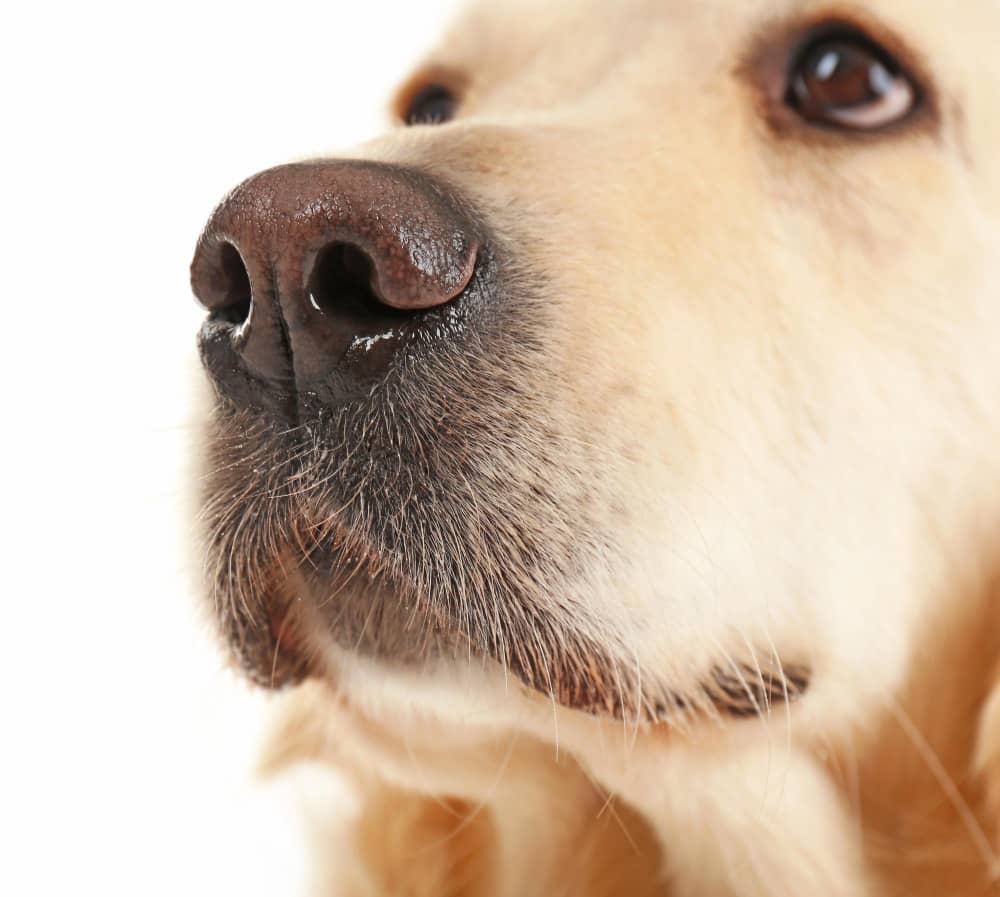
Dogs possess an incredibly potent sense of smell, making their nose a primary source for exploring the world around them. The power of a dog nose allows them to detect various scents far beyond human capability, sensing everything from emotions to illnesses, and even subtle changes in the environment.
The anatomy and body structure of a dog are crucial in enhancing their olfactory abilities, allowing them to detect drugs, explosives, and diseases like cancer and COVID-19.
Anatomy of a Dog’s Nose
The anatomy of a dog’s nose is a marvel of nature, designed to make them unparalleled scent detectors:
Olfactory Receptors:
- Dogs boast approximately 300 million olfactory receptors, dwarfing the human’s 6 million, which empowers them to analyze smells about 40 times more effectively than humans. This vast number of receptors is a key to their extraordinary olfactory capabilities.
Nasal Structure and Function:
- The nose is divided into two chambers, leading to two nostrils, allowing dogs to have a highly nuanced sense of smell.
- A dog’s nose is naturally moist, enhancing its ability to catch scent particles. This dampness is crucial for scent detection, as it allows scent particles to stick to the nose more efficiently.
- The nasal cavity features a complex structure supported by cartilaginous structures, ligaments, and muscles, which facilitate the movement and direction of the nose towards smells. This cavity houses thin turbinate bones known as the nasal conchae, which are covered by the nasal epithelium containing scent receptors.
Specialized Olfactory Tools:
- Jacobsen’s organ, or the vomeronasal organ, acts as a secondary olfactory system designed for chemical communication, further enhancing their ability to detect odors.
- The olfactory epithelium is composed of various cells, including olfactory receptor cells that express a single type of olfactory receptor. The identification of an odor involves the activation of a unique combination of these receptors, demonstrating the complexity and sensitivity of a dog’s sense of smell.
How its Works: Power of a Dog Nose
3D Smelling and Directional Sensing:
- Dogs possess the unique ability to smell in 3D, forming a comprehensive picture in their brain by utilizing their nostrils to take in different smells. They can also determine the direction of an odor, acting as a navigational compass to accurately locate scent sources.
Brain Power and Temporal Detection:
- The canine brain dedicates a significantly larger area to interpreting smells compared to humans—about 40 times larger, in fact. This not only allows for a more nuanced understanding of scents but also enables dogs to detect the passage of time through tiny reductions in odor molecule concentrations. Such a sense of temporal change is crucial for tasks like tracking.
Behavioral Aspects and Environmental Influences:
- Dogs exhibit sniffing lateralization, favoring the right nostril for novel or threatening stimuli and the left nostril for familiar or non-aversive odors. Various factors including age, sex, breed, and environment impact their olfactory abilities and perception of surroundings.
The Role of the Vomeronasal Organ
Dogs possess a unique olfactory tool known as the vomeronasal organ (VNO) or Jacobsen’s organ, which plays a crucial role in their ability to interpret chemical signals in their environment. This specialized organ serves several important functions:
Chemical Communication:
- The VNO is integral for detecting pheromones, chemical compounds that are pivotal in social interactions among dogs. It allows them to sense when other dogs are available for breeding and plays a vital role in mating behaviors.
Mother-Pup Bonding:
- In newborn puppies, the vomeronasal organ enhances their sense of smell, aiding in locating their mother’s milk source and distinguishing her from other nursing dogs, crucial for their survival and development.
Auxiliary Olfactory System:
- The VNO serves as a secondary olfactory system for chemical communication, detecting “undetectable” odors like pheromones. This complements the dog’s primary olfactory system, enhancing their ability to navigate and interact with their environment.
This organ’s significance underscores the complexity of a dog’s sense of smell and its role in their social and reproductive behaviors, further illustrating the extraordinary capabilities of a dog’s nose.
Applications of a Dog’s Sense of Smell: Power of a Dog Nose
The power of a dog nose has paved the way for its application in various crucial fields, demonstrating the versatility and precision of canine olfaction:
Law Enforcement and Safety:
- Narcotics Detection: Dogs are trained to sniff out illegal substances, playing a pivotal role in law enforcement efforts to combat drug trafficking.
- Explosive Detection: The power of a dog nose is utilized in detecting bombs, ensuring public safety in airports, crowded events, and sensitive locations.
- Search and Rescue Operations: Dogs can track and locate missing persons or disaster victims, often in challenging conditions where human efforts fall short.
- Security Patrol: Canines are employed in patrolling borders, protecting important facilities, and ensuring overall security.
Medical Field:
- Disease Detection: Dogs can identify various health conditions, including cancer, diabetes, and infectious diseases like COVID-19, often before conventional testing methods.
- Emotional and Physical Well-being: The power of a dog nose can sense changes in human emotions and cell metabolism, providing comfort and alerting caregivers to potential health issues.
Environmental and Social Insights:
Each application underscores the dog’s nose as not merely a tool for scent detection but as a bridge connecting various aspects of human and environmental health and safety.
The Importance of Scent in a Dog’s Life
Within the problematic tapestry of a dog’s lifestyles, scent performs a pivotal role, weaving together the critical elements of survival, conversation, and emotional properly-being. The profound importance of scent is clear in various sides of a dog’s life:
Emotional Intelligence Through Scent:
- Dogs decipher human emotions by detecting hormonal changes, such as the surge of adrenaline in moments of fear or anxiety.
- The unique scent of individuals helps dogs recognize their owners, fostering a deep bond between human and canine.
Social and Environmental Navigation:
- Scent enables dogs to interpret social cues from other dogs, determining aspects like mood, health status, and even the intentions of others in their vicinity.
- Through sniffing, dogs gather crucial information about their environment, identifying potential threats, food sources, and the presence of other animals.
Well-being and Behavioral Enrichment:
- Regular sniffing activities significantly lower stress levels in dogs, fulfilling their sensory needs and contributing to their overall happiness.
- Allowing dogs to engage in scent walks or sniffing during regular walks provides mental stimulation and helps mitigate unfocused energy, making them feel more secure and content.
Nurturing Your Dog’s Olfactory Abilities
Nurturing your dog’s olfactory abilities can be a rewarding process for both the dog and the owner. Here are some effective strategies:
Introduction to Scent Work:
- Begin with simple scent games using treats or toys as rewards. This not only entertains but also boosts your dog’s confidence.
- Gradually introduce more complex games like “Which One?”, “Shell Game”, and variations of the Shell Game to keep your dog engaged and mentally stimulated.
Enhancing Scent Detection Skills:
- Encourage sniffing during walks by hiding treats in grassy areas or using puzzles and interactive toys that stimulate their sense of smell indoors.
- Consider using snuffle mats or creating DIY sensory boxes with hidden treats to encourage natural sniffing behavior.
- Regularly adjust the difficulty of these games according to your dog’s abilities and experience to maintain interest and challenge.
Environmental and Health Considerations:
- Keep in mind that factors like age, sex, breed, and even environmental conditions can influence a dog’s olfactory abilities. For example, humidity can improve while high temperatures might negatively affect their scent work.
- Be aware of health issues or medications that could impact your dog’s sense of smell and adjust activities accordingly.
By incorporating these practices, owners can significantly enhance their dog’s olfactory skills, providing mental stimulation and improving their overall well-being.
Conclusion: The Power of a Dog Nose
Exploring a canine’s remarkable nose reveals its complex anatomy and vital roles in fields like law enforcement and healthcare. Nurturing these abilities enriches their lives and strengthens the human-animal bond.
FAQs
Q: How does a dog’s sense of smell compare to a human’s?
A: A dog’s sense of smell is vastly superior to a human’s. While humans have around 5 to 6 million olfactory receptors, dogs boast up to 300 million in their nasal cavities, making their sense of smell incredibly powerful.
Q: What is the number of nerve endings in a dog’s nose?
A: A dog’s muzzle is packed with up to 300 million olfactory receptors, thanks to a complex structure of thin bones called turbinates, which are covered by a specialized epithelium. In comparison, humans have up to 5 million olfactory receptors.
Q: What can we understand from the condition of a dog’s nose?
A: The appearance of a dog’s nose doesn’t necessarily indicate its health. Factors influencing the state of a dog’s nose include air humidity, the dog’s activity level, air temperature, the length of the dog’s nose, exposure to sunlight, and how often the dog licks its nose.
Q: Can you explain how a dog’s nose functions?
A: Similar to humans, dogs inhale odor molecules that dissolve in mucus within their noses. These odors are then detected by olfactory receptors, which can cover an area as large as a handkerchief in dogs, depending on their size. These receptors are situated behind the area where sunglasses would rest on a human nose.
Follow us on: Facebook, Twitter, Pinterest, Instagram